
Packing for International Shipping to Thailand: Expert Tips
Moving your household goods to Thailand can be a complex process, but it doesn’t have to be stressful. Whether you are shipping furniture or personal effects, proper preparation is the key to a smooth arrival. In this guide, we share 5 expert packing strategies to protect your belongings and navigate Thai customs requirements in 2026.
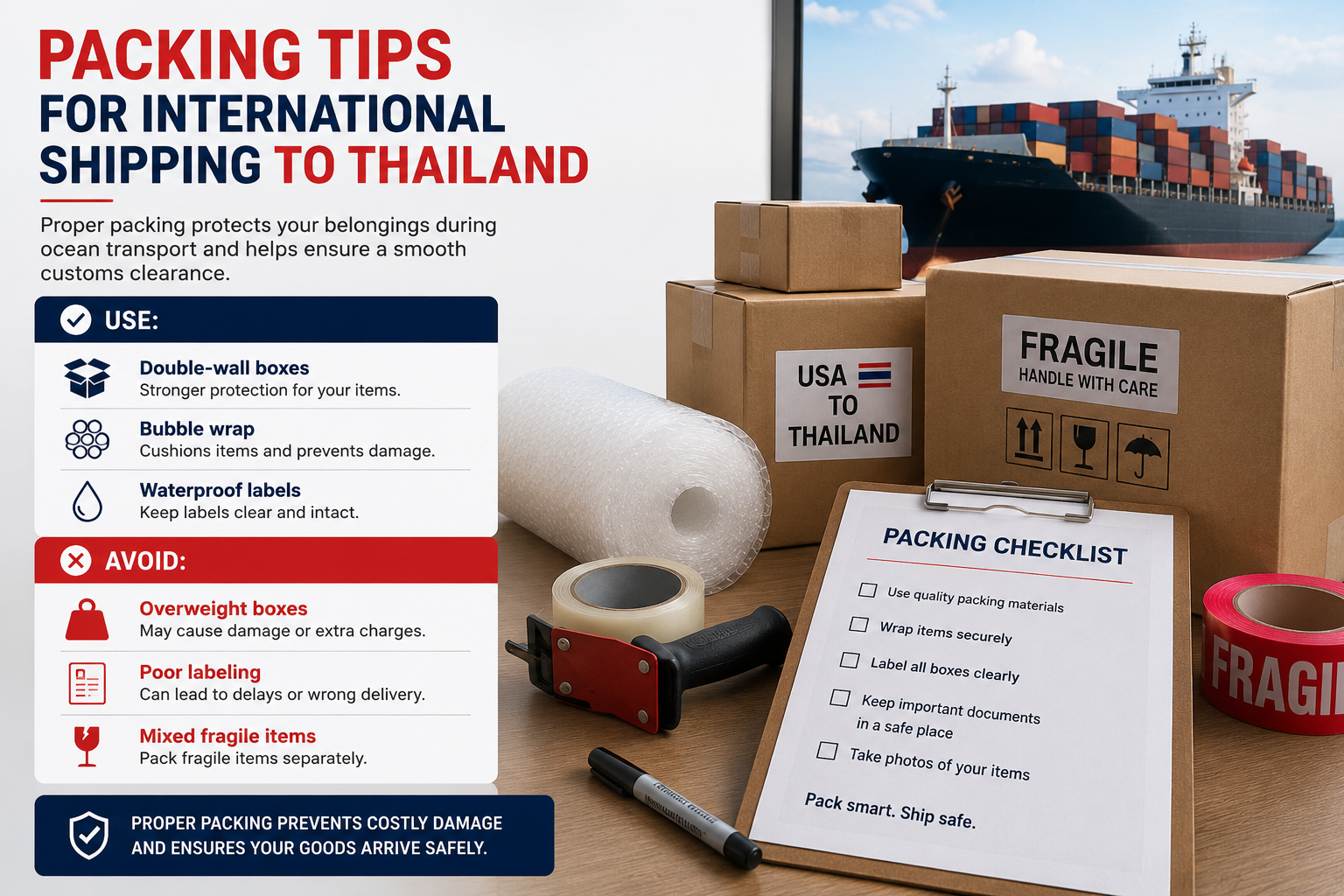
What to Use (Essential Materials)
To protect your items during international transit, be sure to use high-quality materials:
-
Double-wall boxes: Provide the structural strength needed to withstand weight and stacking during transport.
-
Bubble wrap: Essential for wrapping fragile items and absorbing impact.
-
Waterproof labels: Ensure shipping details are legible and protected against moisture.
Best Packing Practices for Fragile Items
When packing for international shipping, fragile items require extra care. Always wrap individual items in multiple layers of bubble wrap and fill empty spaces in the box with packing peanuts or crumpled paper. This prevents internal shifting, which is the most common cause of damage during long-distance transit.
Before you start, check our guide on Shipping From USA to Thailand to understand the transit process.
What to Avoid (Common Mistakes)
Avoiding these common mistakes will save you trouble at customs and reduce the risk of damage:
-
Overweight boxes: Do not exceed recommended weight limits; this increases the risk of box failure.
-
Poor labeling: Incorrect or unclear labeling can cause significant delivery delays.
-
Mixing fragile with heavy items: This often leads to breakage due to pressure or internal movement.
Essential Documentation for Customs Clearance
When packing for international shipping, your documentation is just as important as the physical packing itself. Thai customs authorities require precise information to avoid delays or extra fees.
The Packing List
Always prepare a detailed packing list that includes a description of every item in your boxes. Avoid generic terms like “miscellaneous” or “household goods.” Instead, list specific items, their quantity, and their approximate value.
Declaring Item Values
Be honest and accurate when declaring the value of your goods. Keep copies of receipts for high-value items, as customs may request proof of value during the clearance process. Learn more in our Customs Clearance in Thailand guide.
Why Shipping Insurance is Vital
Regardless of how well you handle packing, accidents can occur during the long journey. Securing comprehensive insurance provides peace of mind. Ensure your policy covers “door-to-door” transit.
Tips for Photographic Documentation
Take clear photos of your items before packing them to ensure you have proof of their condition. This acts as essential evidence should you need to file an insurance claim.
Final Inspection Before Sealing
Before you apply the final layer of tape to your boxes, perform a quick quality check. Ensure that all heavy items are at the bottom and that there is no rattling sound when you gently shake the box. Double-check that your labels are securely attached and clearly visible on multiple sides of the box.
Navigating Thai Customs Regulations
When importing personal belongings, understanding the distinction between “household goods” and “commercial merchandise” is essential. Customs officials in Thailand are rigorous. If you move, your shipment is classified as “personal effects” if items have been in your possession for at least six months.
For more details on navigating these rules, visit our section on Thai Customs Guidelines.
Frequently Asked Questions (FAQ)
-
How do I ensure safety? Use double-wall corrugated boxes and plenty of bubble wrap.
-
What is the most important rule? Avoid mixing heavy items with fragile ones.
-
Does packing affect customs? Yes, clear labeling and accurate documentation help speed up inspections in Thailand.
Leave A Comment