Customs Clearance in Thailand: How to Avoid Shipping Delays (2026 Guide)
Navigating customs clearance in Thailand can feel overwhelming, but it doesn’t have to be a source of stress for your relocation. Whether you are shipping personal effects or household goods, having the right documentation is the most important step to prevent costly delays at the border. In this 2026 guide, we break down everything you need to know about Thai import regulations, required paperwork, and the professional tips you need to ensure your shipment passes through customs efficiently.
Before you pack, check our Shipping From USA to Thailand guide for a full breakdown of the relocation process.
Essential Documentation for Customs Clearance
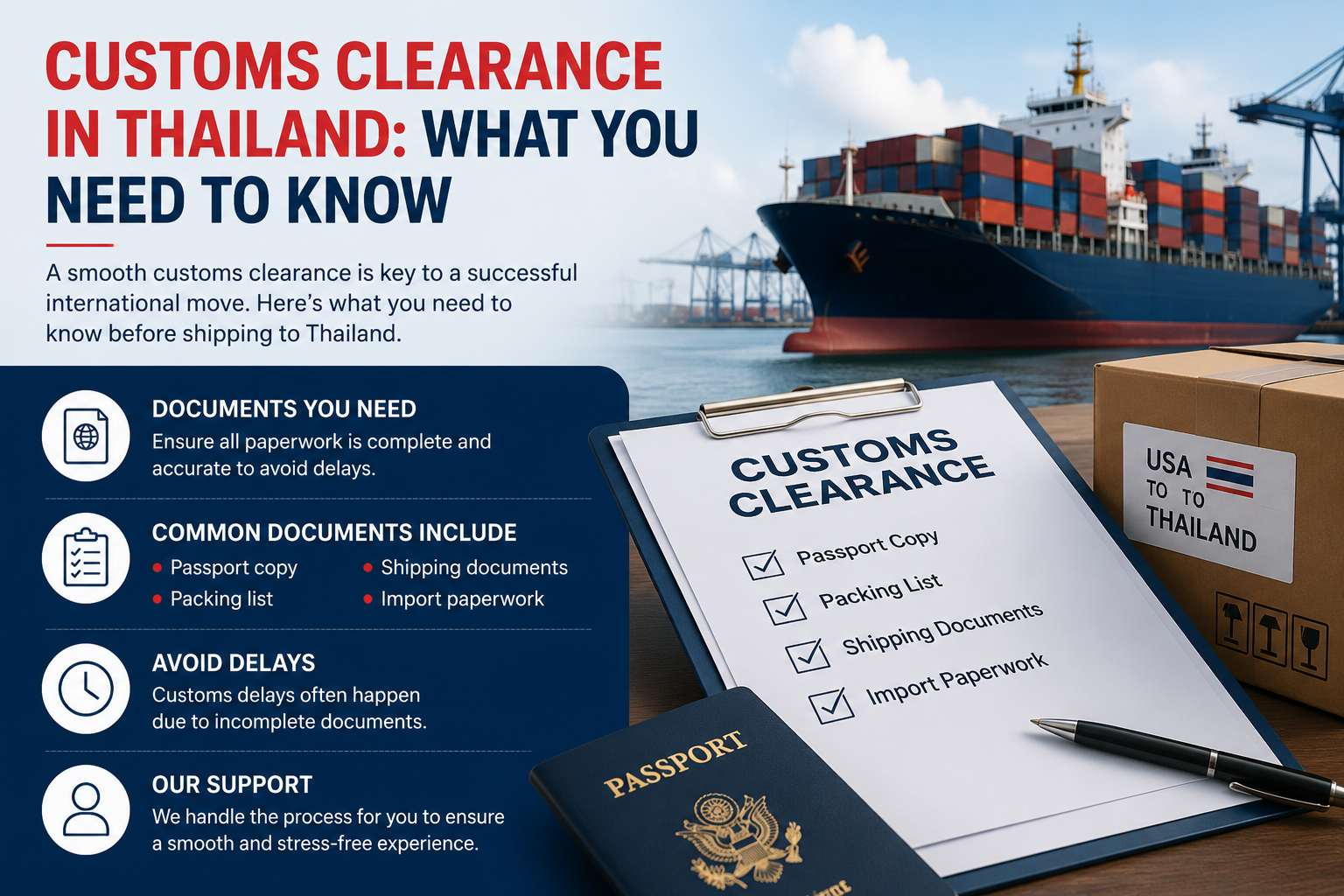
To ensure your goods are processed without issues, you must have your paperwork in order before the shipment arrives. The Thai Customs Department is strict regarding documentation accuracy.
-
Valid Passport: A clear copy of your passport ID page is mandatory.
-
Detailed Packing List: Every box must be accounted for with a specific description of contents. Avoid generic terms like “miscellaneous items.”
-
Shipping Documents: Your Bill of Lading (B/L) or Air Waybill must match your packing list perfectly.
-
Proof of Residency: Depending on your situation, this may include your Thai work permit, retirement visa, or non-immigrant visa.
Understanding Thai Import Regulations
When shipping from USA to Thailand, it is vital to understand the difference between personal effects and commercial goods.
Personal Effects (Duty-Free Considerations)
Items that have been in your possession for at least six months can often be imported as “used personal effects.” This classification may allow for tax exemptions, provided you can prove your legal residency status in Thailand.
Commercial Merchandise
If you include new items in their original packaging, customs may categorize these as commercial goods. This subjects the items to import duties and Value Added Tax (VAT), regardless of their intended personal use.
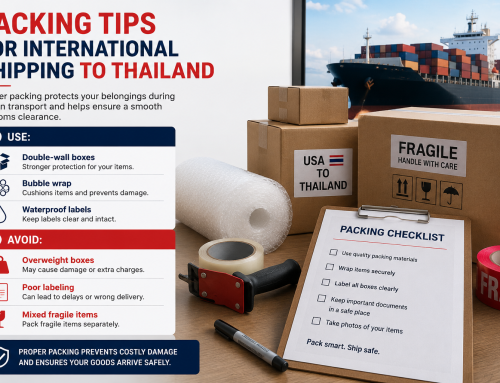
For more information on how to prepare your goods for the journey, read our Packing Tips for International Shipping to Thailand.
Tips to Prevent Customs Delays
Delays typically occur due to vague descriptions or missing documents. Follow these professional tips to keep your shipment moving:
-
Be Specific: List every item clearly. If a box contains kitchenware, list “plates, cups, cutlery” instead of just “kitchen items.”
-
Verify Your Visa: Ensure your residency documentation is valid and active before your goods reach the port.
-
Work with Professionals: A reputable shipping partner can act as your broker, communicating directly with Thai customs to resolve issues before they become major hurdles.
Are you still planning your overall move? Check our complete Shipping From USA to Thailand relocation guide.
The Role of a Licensed Customs Broker
In many cases, the most efficient way to clear Thai customs is to work with a licensed customs broker. They act as your representative, ensuring that all paperwork is compliant with current 2026 regulations and handling communication with officials on your behalf. This significantly reduces the risk of ‘hidden fees’ or unnecessary delays caused by administrative errors, making it a highly recommended step for those shipping large volumes of household goods.
Frequently Asked Questions (FAQ)
How long does customs clearance take in Thailand? Typically, it takes 3 to 7 business days, though this can vary based on the completeness of your documentation and seasonal port traffic.
Can I ship prohibited items? No. Thailand has strict laws against importing firearms, illegal drugs, and counterfeit goods. Attempting to ship these will result in immediate seizure and legal consequences.
Do I need to be present for customs clearance? Usually, your shipping agent handles the physical clearance, but you must be in Thailand and possess the required visa/work permit to authorize the release of your goods.
Leave A Comment